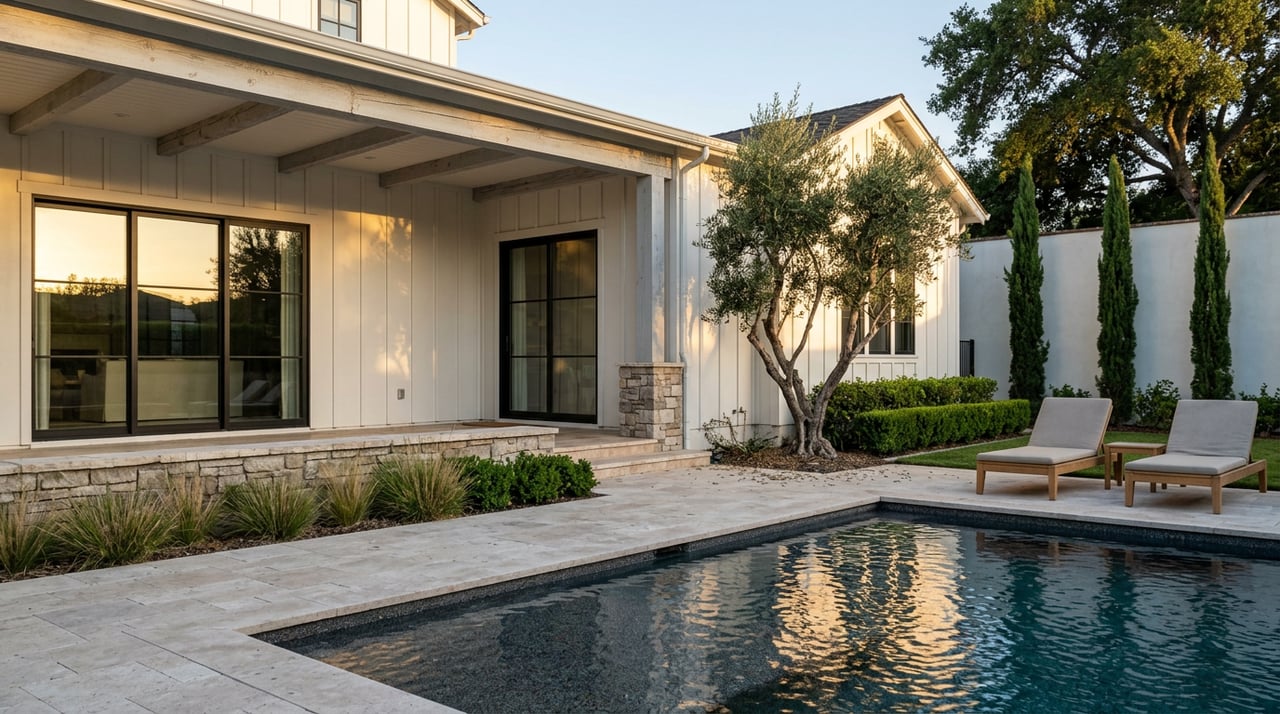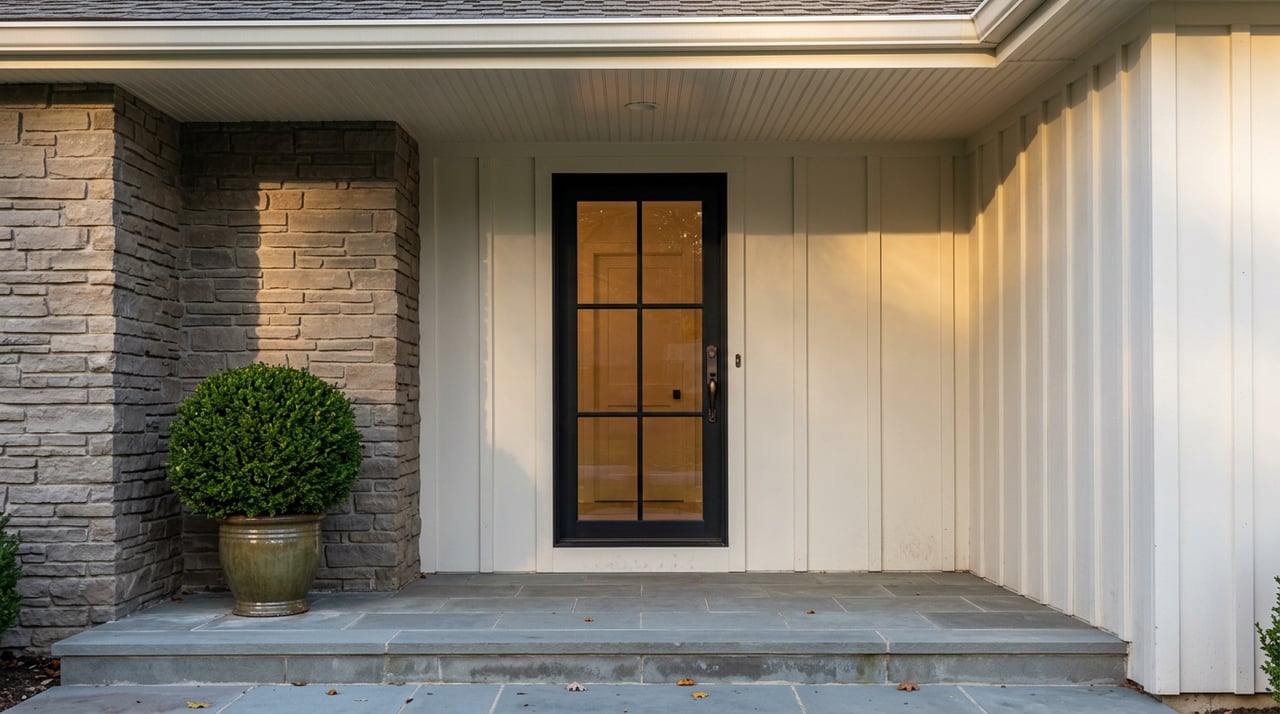
If two Danville homes list at exactly the same price this fall, why would one cost you nearly three thousand dollars more a year to actually own?
The answer isn't hiding in the kitchen finishes or the lot size. It's sitting on a line of the property tax bill that never makes it into the listing photos, the price-per-square-foot comparison, or the mortgage pre-approval letter you got before you started touring homes. That line is Mello-Roos, and in Danville it doesn't apply evenly. It clusters in specific pockets, skips others entirely, and can turn two homes with identical price tags into two very different monthly payments.
The Line Prop 13 Doesn't Cover
California's Proposition 13 caps the base property tax rate at 1% of a home's assessed value, and most buyers assume that number, give or take a small bump for local bonds, is the whole story. It isn't. In 1982, the state passed the Mello-Roos Community Facilities Act, named for the two legislators who wrote it, to give cities and counties a way to fund infrastructure in new developments after Prop 13 cut off their usual revenue tools. The law lets a local government draw a boundary around a development, called a Community Facilities District, issue bonds for roads, schools, or parks inside that boundary, and charge every parcel within it an annual special tax until the bonds are paid off.
That special tax is the part worth understanding before you fall in love with a house. Because Mello-Roos is a special assessment rather than an ad-valorem tax, it isn't calculated as a percentage of what your home is worth, and it isn't limited by the same 1% cap that governs your base property tax. It's set by the bond itself, often using a formula tied to lot size or square footage, and it sits on the bill as its own line, separate from everything Prop 13 protects.
Where This Shows Up Around Danville
Danville's older core, the Westside and downtown blocks within walking distance of Hartz Avenue, was largely built out before Community Facilities Districts became a common financing tool. Most of that housing stock carries little or no Mello-Roos, because there was no new-development bond to fund in the first place.
The picture changes as you move toward the newer subdivisions along the Camino Tassajara corridor and the developments built up near Blackhawk's edges over the past two decades. Monterosso, for example, is a Lennar-built community from roughly 2006 to 2008, set just outside Blackhawk's East Gate, built around an Italian hill-town theme with three home collections, Viella, Vercelli, and Milano, ranging from about 2,800 to 4,300 square feet. It carries a Danville mailing address, but the parcels sit in unincorporated Contra Costa County rather than the incorporated Town of Danville, which is exactly the kind of newer, bond-financed development where a CFD is worth checking.
That pattern isn't unique to one subdivision. Lenders working across Contra Costa County have specifically flagged Dougherty Valley in San Ramon and parts of Danville as places where the effective property tax rate can climb to 1.50% or higher, compared to the 1.10% to 1.40% most county homeowners pay. The gap between those two numbers, on a home in the high six figures or low seven figures, is not a rounding error.
Here's roughly how the two sides of town tend to differ:
| Older core (Westside, downtown) | Newer subdivisions (Camino Tassajara corridor, Blackhawk-adjacent) | |
|---|---|---|
| Base property tax | ~1.1% | ~1.1% |
| Mello-Roos / CFD | Rare | Possible, verify per parcel |
| Combined effective rate | Close to base | Up to 1.50%+ in flagged areas |
| Typical HOA | Often minimal or none | Can run well above standard planned-community dues in gated sections |
What the Extra Line Actually Costs
Across Bay Area tracts that do carry it, a Mello-Roos charge typically runs $1,500 to $4,000 a year, which works out to roughly $125 to $333 a month layered on top of the regular tax bill. To put a real number next to that range, one Tri-Valley new-construction parcel owed $5,048 across two overlapping Community Facilities Districts in fiscal year 2025-26, a figure that lands at the higher end of what a buyer might see on a newer East Bay property.
That's not a one-time closing cost. It's a recurring annual charge, and unlike your base tax, it doesn't rise or fall with your home's market value. It stays fixed to the bond schedule, which typically runs 20 to 40 years from issuance. On a $250,000 mortgage payment shortfall it would never show up on, that difference is exactly the kind of number a lender's debt-to-income calculation will catch even if a quick online estimate misses it.
Finding Out Before You Write the Offer
The good news is that this isn't a mystery you have to guess at. It's a line item, and it's public.
Ask for the current secured property tax bill on any home you're seriously considering, not just the listing sheet. Look for anything labeled "CFD," "Community Facilities District," or "Special Tax." The Contra Costa County Assessor's parcel search tool will show the same information tied to the property's parcel number, and it's worth pulling before you get deep into a purchase agreement rather than after.
If the home sits in a gated or master-planned community like Blackhawk, ask for the HOA's CC&Rs and current dues schedule at the same time. Standard planned communities in the area often run monthly dues in the range of $150, while private, gated neighborhoods have been known to run well above $600 a month for guard services, golf access, and common-area upkeep. Neither number shows up in a home's list price, and both belong in the same conversation as Mello-Roos when you're comparing two properties that look identical on paper.
A Mello-Roos charge doesn't move with your home's value. It moves with the bond schedule, which means it can be the steadiest number on your tax bill and the easiest one to miss.
Why This Matters More in Today's Market
Danville's 94506 ZIP code carried a median list price of $2,349,850 as of the week of September 6, 2026, with inventory down to 62 homes and a market action index suggesting a seller's market where pricing pressure is likely to keep climbing. In a market moving that quickly, buyers don't have the luxury of slow-walking due diligence. If you write an offer, get into contract, and only then discover a CFD assessment adding a few hundred dollars to your monthly payment, you're negotiating from a weaker position than if you'd checked the parcel record before you ever toured the second time.
The homes that look the most similar on the surface, similar price, similar square footage, similar finishes, are often the ones where this line makes the real difference. Checking it early isn't extra caution. It's the difference between comparing two houses and comparing two actual monthly payments.
A Couple of Questions Worth Asking
Does Mello-Roos ever go away? Yes. The special tax is tied to the bond that funded the district's infrastructure, and it typically ends 20 to 40 years after the bonds were issued, though some districts continue collecting a smaller amount afterward for long-term maintenance.
Does it affect how much home I can qualify for? It can. Lenders generally fold Mello-Roos into the same housing-payment calculation as your base property tax and HOA dues, which means a home with a CFD assessment can shift your qualifying numbers even if the purchase price is identical to a home without one.
If you're comparing two Danville listings and the tax lines aren't adding up the way you expected, that's exactly the kind of question worth working through before you write an offer, not after. AJ Cohen Homes has spent two decades reading East Bay parcel records the way most people read a listing description. Let's Connect and go through the numbers on the specific homes you're considering.